
Death of a Double Crested Cormorant (“phalcrocorax auratus”)
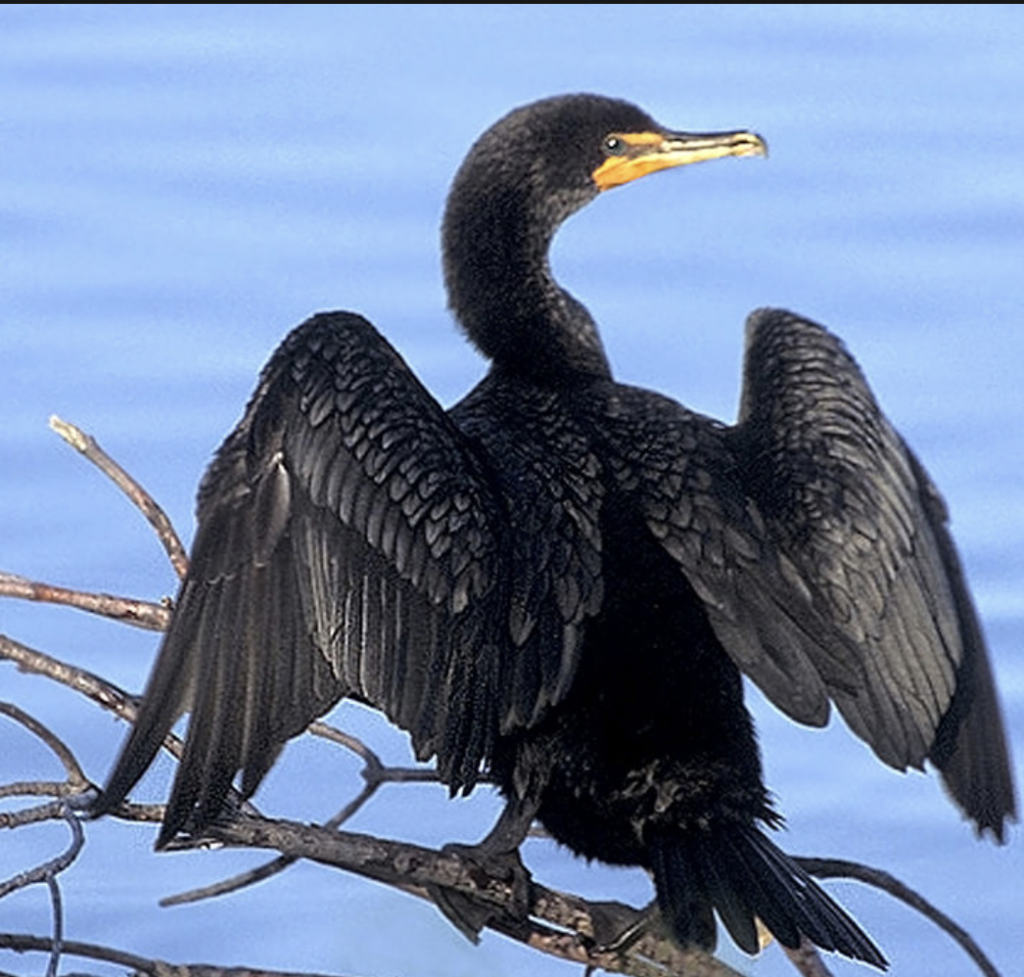
Several days ago at dusk, I was driving through Johnson Park past the large pond across from the old zoo. Multiple Cormorants were flying in and perching on the one of the higher branches of the largest tree between the pond and the Raritan River (where frequently an Eagle is perched). One Cormorant was flying in and suddenly was jerked upwards. It seems that one of his feet was entangle in a fisherman’s monofilament line and the other end of the line in a tree branch. As hard it tried flapping it wings to get untangled, it did not happen. For the next few days its body upside down swung back and forth in the breeze. On the fourth day, the body was gone. Fell to earth, removed by a predator?
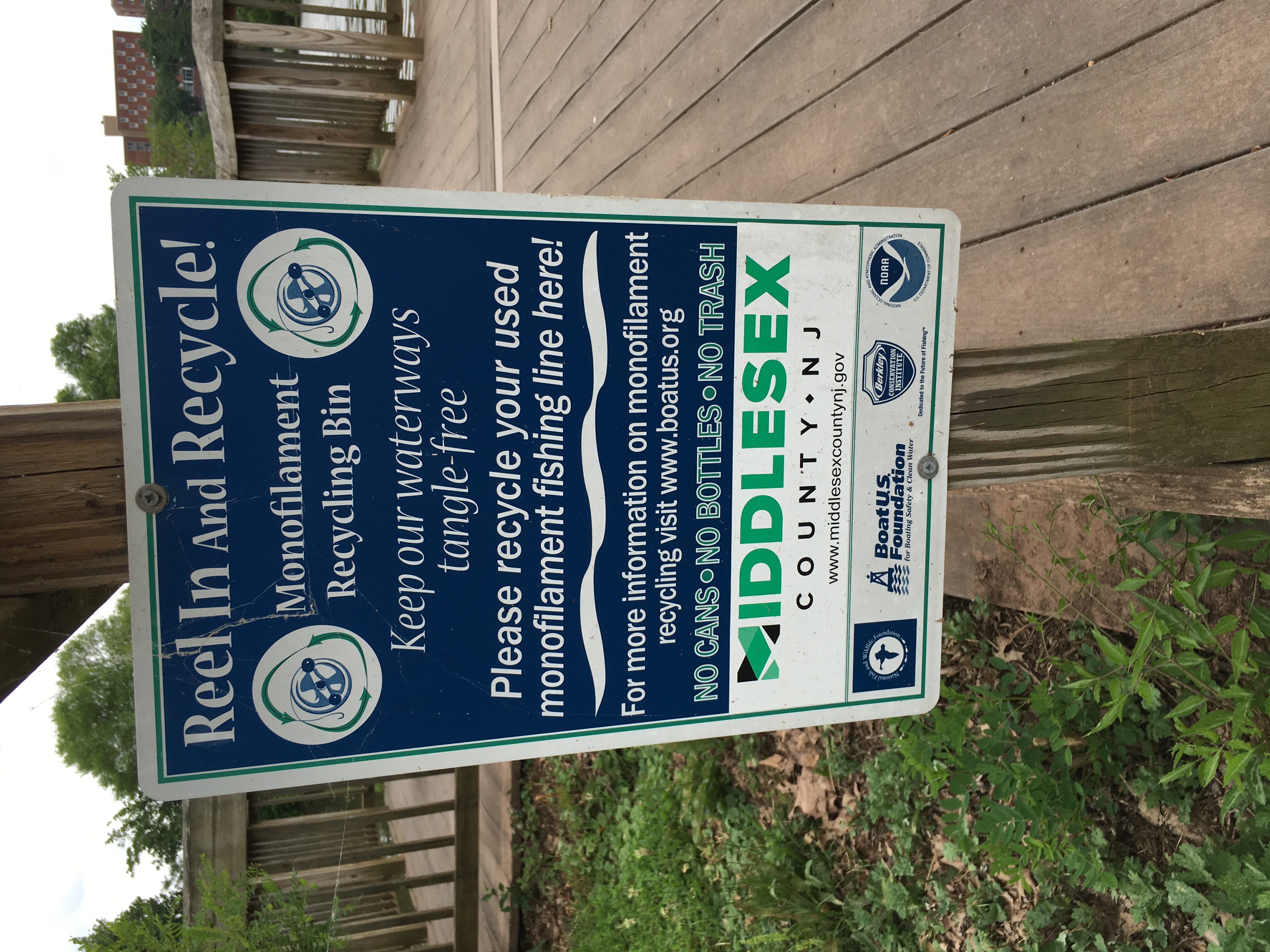
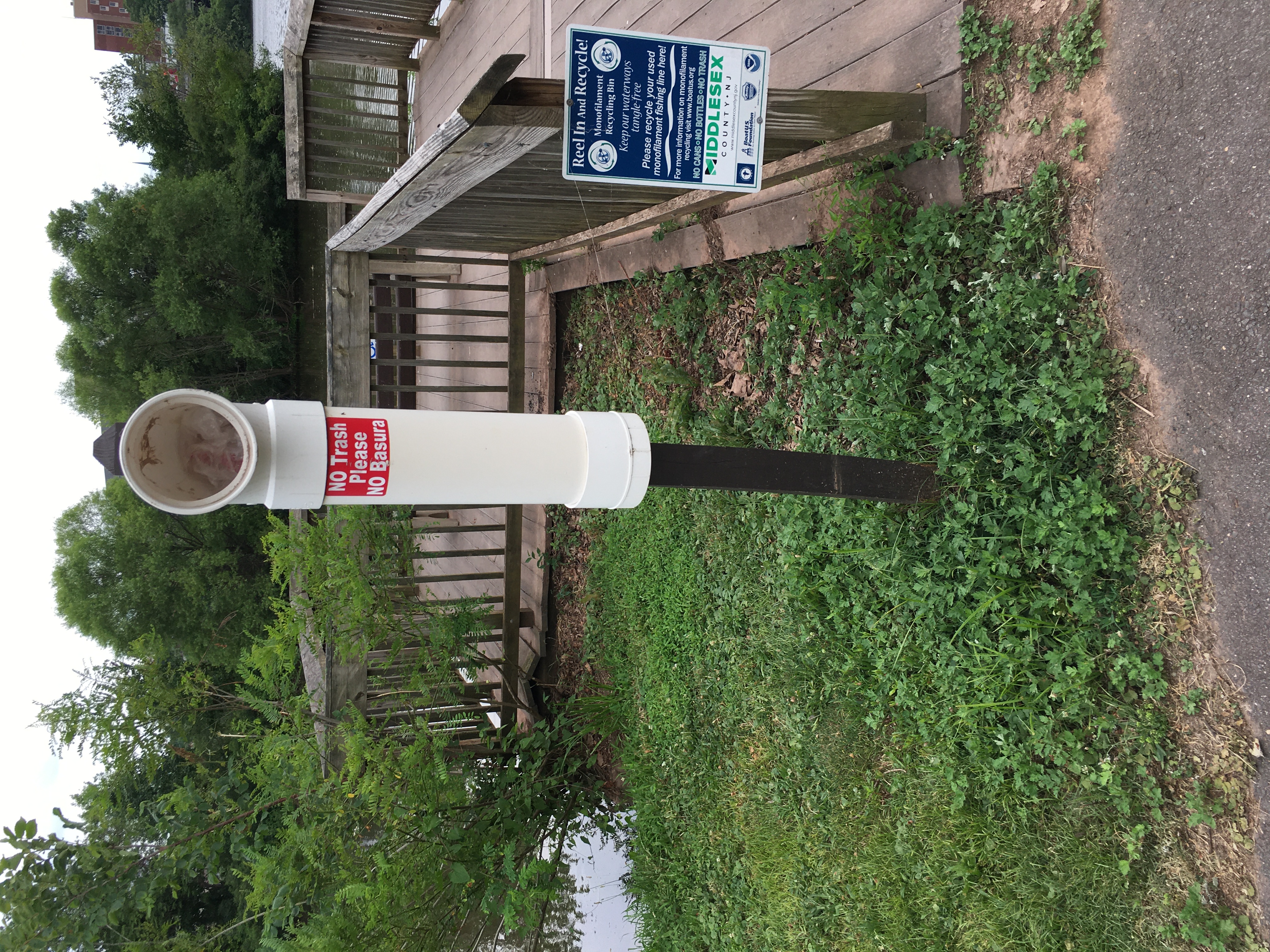
The important point is that monofilament fishing line should be discarded properly. There are containers for the filament by both of the major ponds in Johnson Park (see figures below).
New Bird in Johnson Park
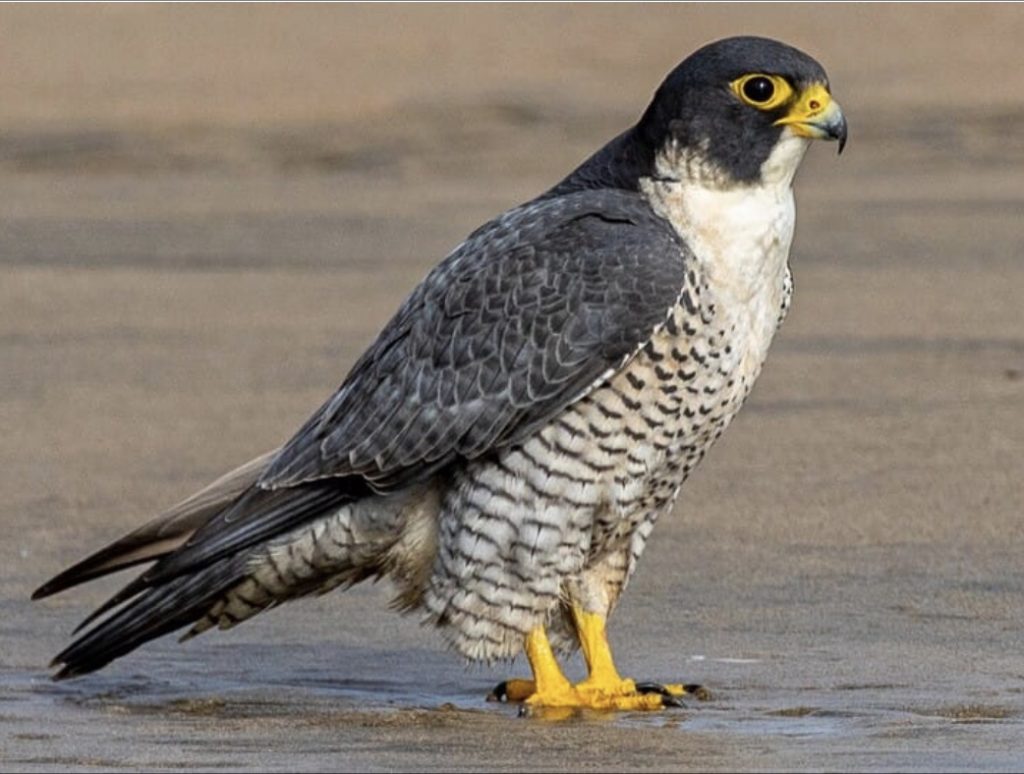
Since the last week in April, a Peregrine Falcon has been seen in the trees just east of the John Lynch Bridge (Rt. 18) along the Raritan in Johnson Park. On one occasion there were two Peregrine Falcons in the trees. There is speculation that they may want to nest on the bridge, which is not unusual in an urban environment. In Jersey City they are known to nest on ledges of tall buildings.
Peregrine feed on other birds. They will dive from above going about 200 mph and hit the prey with their talons. The impact is sufficient to kill the prey.
Summary of the Raritan Estuary Christmas Bird Count, Dec 26, 2021
A member of the Environmental Commission participated in the National Audubon Christmas Bird Count for the Raritan Estuary. Below is the summary of the results of the Bird Count complied by Tom Ostrand.
2021 is the 84th year since the first Raritan Estuary Christmas Bird Count was held on Dec 24, 1938, and the 82nd time the count has been reported. (There are no count records for 1960 and 1961). This year’s count was held on Dec 26, 2021. Forty-seven birders in 19 teams enjoyed exceptional weather for the day: clear skies, light wind, and temperatures between 40 and 53.
The count recorded 108 species, equal to last year’s total, and 3 short of the record reached in 2007. The total number of individual birds seen was 50005, a little above the average of the past 20 years.
A spreadsheet with separate team records for the 2021 count can be found at https://bit.ly/RaritanCBC2021.
Eleven species were found in higher numbers than on any previous count.
Thirty-nine Common Ravens was a huge increase over the previous high of 11 that were seen just last year. Pileated Woodpeckers showed a similar increase, with 11 individuals compared to the previous record of 3. Both species are relatively recent additions to the count, and have become increasingly frequent in Middlesex County throughout the past few years.
By far the biggest increase was the 46 Boat-tailed Grackles seen along the Raritan River. These birds have become more common during the summer along the Raritan bayshore, especially at Laurence Harbor and Old Bridge, but through all 81 previous count days, only a single Boat-tailed Grackle has ever been recorded, on the 2009 count.
Great Blue Herons passed the new record of 69 set only last year, with 77 counted. Bald Eagles achieved the same feat, increasing last year’s record of 40 by one bird.
This year’s new high counts are:
| 12/26/21 Count | Previous High Count | Number of Previous Years Counted | |
| Great Blue Heron (Blue Form) | 77 | 69 | 59 |
| Turkey Vulture | 104 | 97 | 28 |
| Cooper’s Hawk | 22 | 21 | 56 |
| Bald Eagle | 41 | 40 | 15 |
| Virginia Rail | 3 | 2 | 15 |
| Yellow-bellied Sapsucker | 15 | 11 | 35 |
| Northern Flicker | 97 | 76 | 28 |
| Pileated Woodpecker | 11 | 3 | 8 |
| Common Raven | 39 | 11 | 9 |
| White-throated Sparrow | 1778 | 1281 | 81 |
| Boat-tailed Grackle | 46 | 1 | 1 |
Other notable finds are the count’s second Lark Sparrow, seen in Donaldson Park (the first one was in 1988), an Osprey at Raritan Bay (5th time for the count), Cackling Goose (5th time), Orange-crowned Warbler (7th time), Great Egret (8th time) and a Common Yellowthroat (9th time).
The most exciting find on the count was the female Painted Bunting seen and photographed at the entrance to the Edgeboro landfill. This was Painted Bunting’s third occurrence on the count, and it was enhanced by a detailed visual description of a female Painted Bunting seen 1.5 miles away on the north shore of the Raritan River, about 3 hours earlier than the Edgeboro bird. Were these two sightings of the same bird? Given the rarity of the species, the relatively short distance and the time separation between the sightings, the count will report a single Painted Bunting, and leave it to the NJ Bird Records Committee to decide whether 1 or 2 Painted Buntings were present in Middlesex County on Dec 26.
Not seen on the count day, but noted during count week were Lesser Black-backed Gull, Pine Warbler and White-crowned Sparrow.
Some common birds that are frequent visitors to backyards were unusually scarce. Tufted Titmouse has averaged 157 over the past 20 years; this year the count found 35. Both Black-capped (19) and Carolina (15) Chickadees showed up at about 1/4 their average occurrences since 2001.
Crow numbers can vary greatly, but still were extremely low in 2021. American Crow has averaged 644 since 2001; this year’s total is 137. The Fish Crow average since 2001 is 319; this year recorded 5. Eighteen Crows were tallied without specific id.
Great Black-backed Gull came in at 172, the lowest number since 1965, and only 1/7 the 20 year average. This may be a realistic figure, but at least partly it reflects the difficulty of pinning definite species on the vast numbers of gulls that are constantly in the air over the river and the nearby landfills.
Count records since 1938 reveal various interesting trends.
Until the late 1970s, Accipiters were rarely recorded: from 1938 to 1976, both Sharp-shinned and Cooper’s Hawks averaged fewer than 1 report per year. The next 24 years (1977-2000) saw the averages increase dramatically, to 8.0 for Sharpies and 2.5 for Coops. For the 21 years of the 21st century, Coops have overtaken Sharpies as the more common Accipiter, with an average of 13.1 vs. the Sharp-shins 9.5.
Prior to 1992, Downy Woodpeckers always vastly outnumbered Red-bellied Woodpeckers on the count; before 1985, a very good number of Red-bellied was 2 (two!). That is now ancient history, as Red-bellied Woodpeckers have become firmly established as one of the most common species in our area.
Red-bellied WP surpassed Downy WP for the first time in 2001, with 83 vs. the Downy’s 71, and they won the competition this year by 128 to 104. The score since 2001 stands at Downy 13, Red-bellied 8.
Not all trends are up. American Tree Sparrows have been steadily decreasing for many years. From a record total of 1080 in 1953, totals have descended through the 100s down to a low of 15 in 2019. This year’s count found 42. The yearly totals are of course affected by the weather, the number of count participants, and the number of hours that people are in the field, but there is no doubt of the long-term decline of Tree Sparrows. The graph (attached to this email) of birds found on each count per the number of field-birding hours shows a striking decline in the species over the past 65 years. You can see the data and generate similar graphs for any species on any count at the Audubon Christmas count website https://www.audubon.org/conservation/science/christmas-bird-count.
Species diversity in a one-day count depends on slender threads, provided by the sharp eyes and ears of spirited birders. Of the 108 species identified in the 2021 Raritan Count, 11 were represented by a single individual, and 17 were observed by only one of the 19 count teams.
All the reports and data collected for the CBC are due to the dedicated efforts of the enthusiastic count participants. Many thanks to everyone for joining, and helping to make this another excellent count.
Thanks are also due to the Middlesex County Utilities Authority, Federal Business Systems and Summit Associates Inc for providing access to areas that are normally off-limits to the public. We are very grateful for their cooperation and assistance.
Have a great birding year in 2022, stay healthy, and come back next December for the Raritan Estuary count!
Tom Ostrand
Raritan Estuary CBC compiler
Winter River Ducks and Winter Birds Arrive
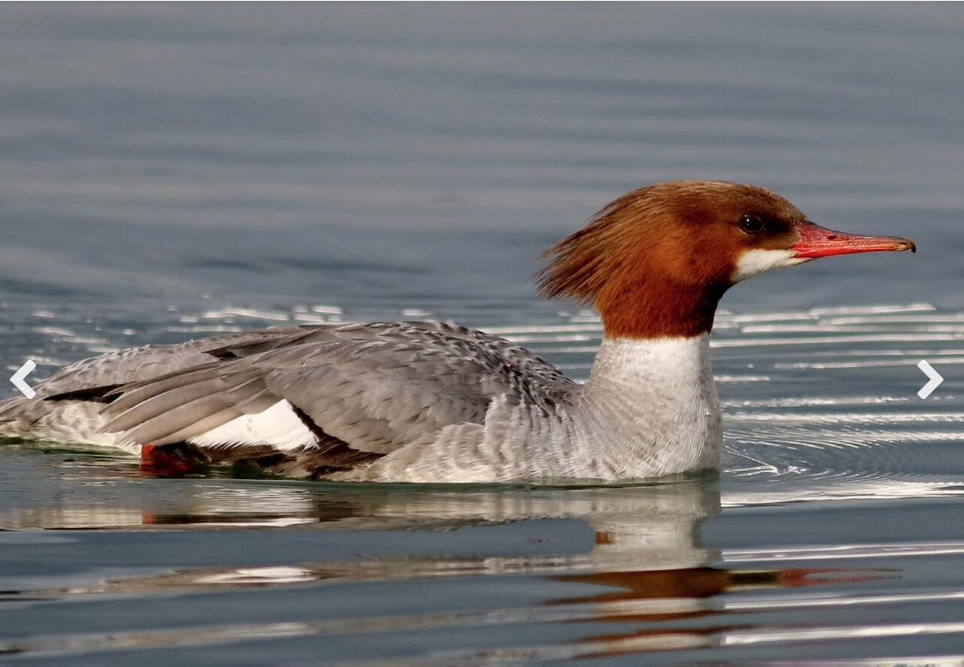
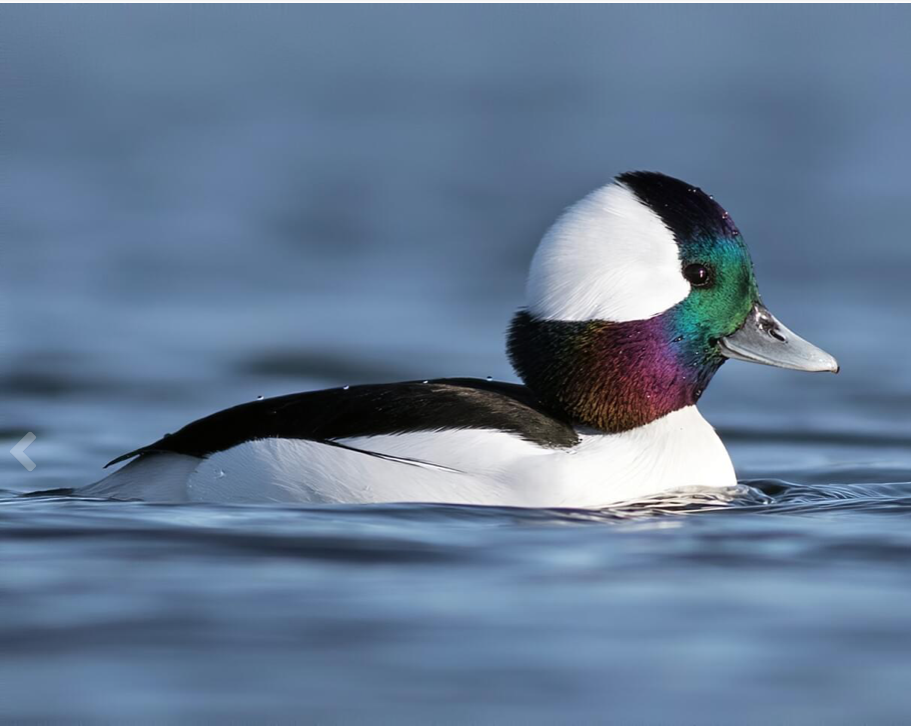
Female Common Mergansers and Buffleheads have been observed in the Raritan River in November off of Donaldson Park and Johnson Park.
ParkSlate Colored Juncos and White Throat Sparrows have been sighted in many backyards in late November.
Throughout November one or two Eagles has been repeatedly seen in Johnson Park in the tallest tree between the River and pond across from the old Johnson Park Animal Haven!
Spotted Lantern Fly Invades Highland Park and NJ
The spotted lantern fly (SLF) is an invasive insect originally from South East Asia. It feeds on tree and shrub sap and eventually can kill their host. The SLF was originally introduced into the US in 2014 in Berks County, Pennsylvania apparently attached to imported stone. The SLF nymph is about 1 inch long has distinctive red spots (first image below with nymph and adult with wings closed); the adult SLF has distinctive red patches on its wings when the wings are spread (see second image below). Third image is of an infested tree. The whole northeast of the US is now infested with SLF’s. Locally, the Meadows and the Rutgers Ecological Preserve are infested. They have been reported in all of the neighborhoods of Highland Park. The preferred host is the Tree of Heaven (an introduced species of tree) but is known known to attack at least 70 species of trees, shrubs, and fruit vines in the US.
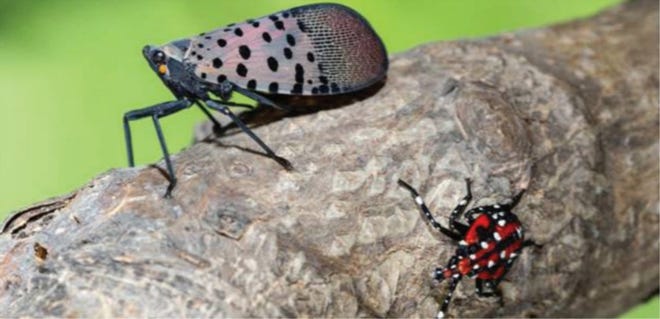


NJ Department of Agriculture had recommended that the nymph and adults be crushed or collected in bags, sealed, and place in the trash.
At this point time, mid September, there are only adult SLF’s around. The female adults are laying eggs masses on trees. NJ Department of Agriculture recommends that the egg masses be scraped off and disposed of in the trash alternately the egg masses can be treated with paraffinic and/or mineral oils
Further information can be found about the Spotted Lantern Fly at the following URL’s:
https://www.nj.gov/agriculture/divisions/pi/prog/pests-diseases/spotted-lanternfly/
https://njaes.rutgers.edu/spotted-lanternfly/
https://www.dailyrecord.com/story/news/2021/08/31/spotted-lanternfly-nj-quarantine-list/5661658001/
https://www.dailyrecord.com/story/news/2021/08/31/spotted-lanternfly-nj-quarantine-list/5661658001/
Environmental Commission Awarded Grant for 200 Trees and Shrubs for The Meadows


The Borough of Highland Park and the Environmental Commission have been awarded a Roots for Rivers Reforestation Grant from Sustainable Jersey/The Nature Conservancy. The grant will allow the Environmental Commission and Meadows Volunteers to plant 200 trees and shrubs in the flood plane section of the Meadows, which will increase the tree canopy and prevent soil erosion into the Raritan River.
We will be looking for additional volunteers to help plant these trees in the spring. If you are interested send your name through the Contact Us menu.
More Winter Ducks
Common Megansers 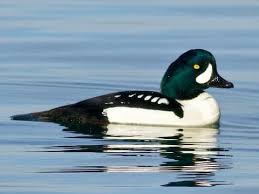
Golden Eye
In December the “Winter Ducks” – Common Mergansers, Common Goldeneyes, and Buffleheads were seen In the Raritan Rive off of Donaldson Park and Johnson Park. They were about a month later compared to past years.
Just west of the John Lynch bridge is probably the best site in the Raritan River to observe these ducks.
In a previous post “For the Birds” had an image of a Bufflehead.
Eagle Scout Project: Benches
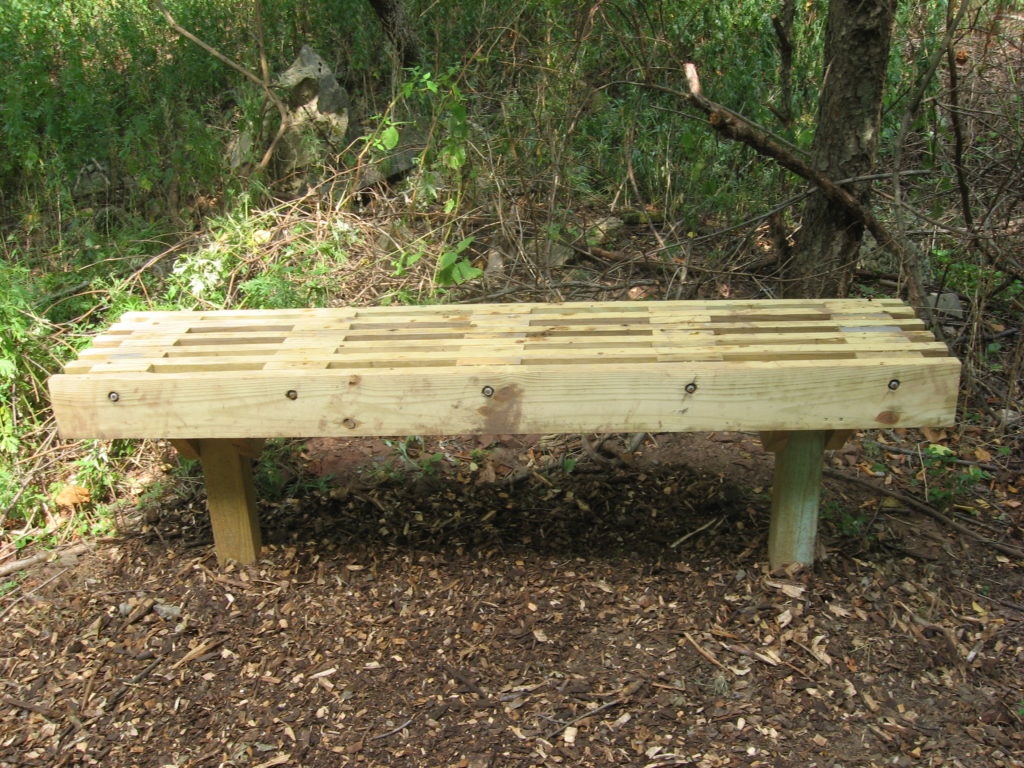

The Environmental Commission has sponsored several Eagle Scout projects. The one that has received most interest is Jon Winter’s bench project where he and his team built f our benches located in The Meadows. As the Environmental Commission has moved to a new website, we have migrated the documentation for building these benches to this site. Andrew Bowman is another Eagle Scout, who also built benches based on Jon’s plans. He has provided even more detailed plans for these benches. Link to the Jon’s and Andrew’s plans are below.
Any scout or any other person is free to utilize these plans to build their own benches. No permission is needed.
.
For the Birds
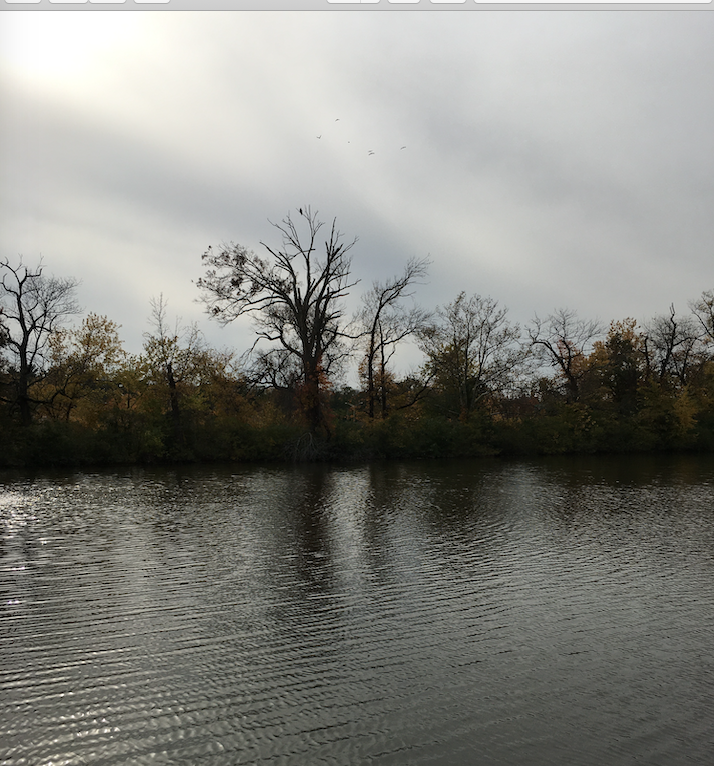


For the past several years, there has been a nesting pair of Eagles in the Johnson Park area. They are frequently spotted near the top of the largest tree between the pond behind the Johnson Park zoo and the Raritan River (see above). The Eagle is seen 2-3 times a week on this tree. On rare occasions, you will see two Eagles in this tree.
During the winter the Raritan River by Johnson and Donaldson Parks is host to many “winter” ducks including Buffleheads, Common Golden Eye, Common Merganser, Red Breasted Merganser, Hooded Merganser, and occasionally Common Loons.
Buffleheads were seen off Johnson Park by the John Lynch Bridge in mid November.
What New in the Highland Park Meadows
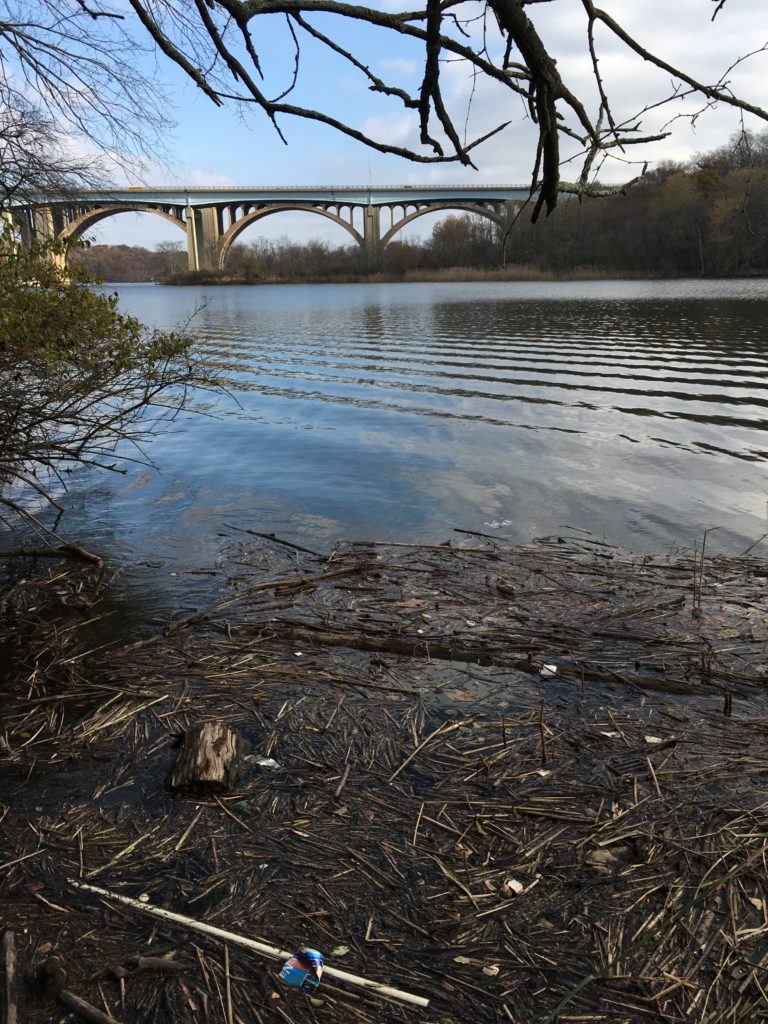
As many resident are aware PSE&G is building a solar farm on the Upper Meadows adjacent to Donaldson Street. This location use to be a municipal landfill, which was closed prior to there being any DEP regulations. As part of the approval process, DEP wanted concrete and asphalt removed from specified areas of the (lower) Meadows.
A great deal of concrete has been from first 50 feet of the Meadows trail and various locations along the loop trail making the area more natural.
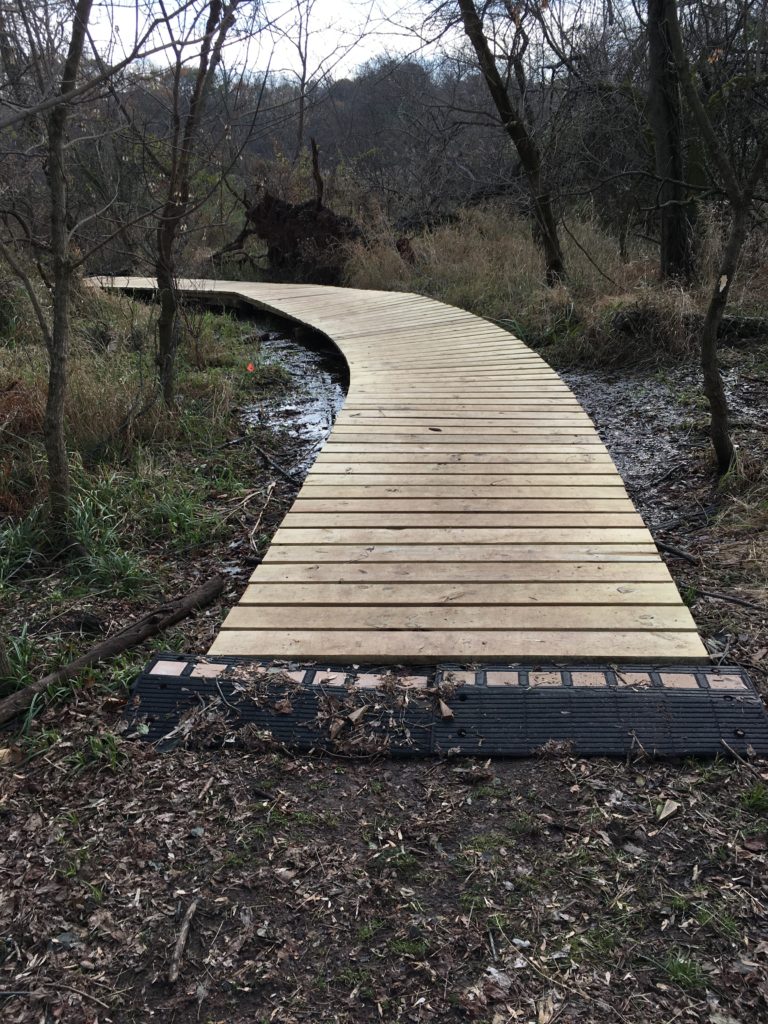
The Meadows volunteers have built a new boardwalk over a marshy area on trail spur leading to the Raritan River. This should make access to the river much easier especially during new and full moon high tides.